
What a Live Floor View Tells You That a Paper Chart Never Could
A live floor view catches bottlenecks and wait-time guesses that a paper chart only reveals after the damage is done.
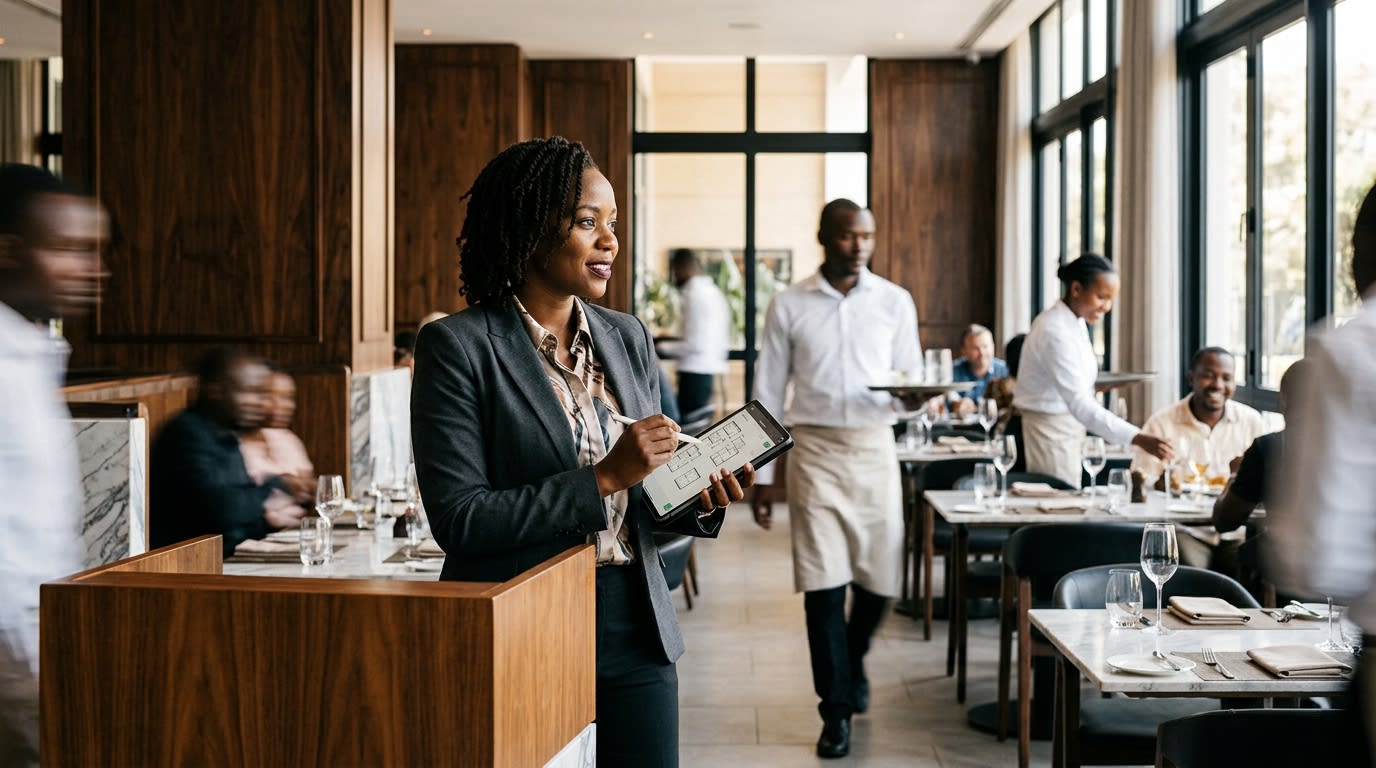
The limits of a paper chart or whiteboard during a rush
Every restaurant manager knows the moment. The whiteboard says table 12 is free, but a couple are still lingering over coffee. The paper chart says table 6 turned twenty minutes ago, but nobody has actually reset it. During a quiet service these small gaps barely matter. During a rush they compound fast, and the team ends up managing the chart instead of managing the floor.
Paper and whiteboards record decisions after they happen. Someone has to walk over, look, remember, and update. That lag is fine when covers are light. Once a rush builds, the lag becomes the problem: hosts seat guests into tables that are not really ready, servers get blindsided by a party that was never logged as sat, and the kitchen fires food for a table that has already asked for the bill. None of this is because the team is careless. It is because the tool they are using cannot keep pace with a floor that is changing every minute.
What a live floor view actually shows: status, timing, turn stage
A live floor view replaces that guesswork with a picture that updates as service happens. Instead of a static grid, the team sees each table's real status: occupied, ordering, food served, awaiting bill, or clear and ready. Alongside status sits timing, how long a table has been at each stage, which turns a vague sense of 'they've been there a while' into something concrete a host or manager can act on.
This matters because service problems rarely announce themselves. A table that has been sitting at 'awaiting bill' for longer than usual is not a crisis on its own, but it is a signal. Seen early, on a live view, it is a two-minute nudge from a server. Missed until the queue at the door is visible, it is a guest complaint waiting to happen. The value of a live floor view is not the data itself but the earlier warning it gives a team that is already busy.
- Status per table: occupied, ordering, served, awaiting bill, clear
- Time elapsed at each stage, not just total time seated
- A single view the whole floor team can check without asking each other
How branch-level scheduling connects staffing to the floor picture
A floor view is only half the story if staffing is planned separately from it. Branch-level scheduling means the people rota and the table picture live in the same system, so a manager looking at Friday evening can see not just how many covers are expected but how many staff are on the floor to handle them. When a site is short a server for the 8pm section, that shows up next to the tables it affects, not in a separate spreadsheet nobody checks until the week after.
For groups running more than one site, this also means patterns become visible across branches rather than being locked in one manager's head. If one branch consistently runs lean on Friday doubles and another consistently overstaffs a quiet Tuesday, that is a scheduling conversation worth having with real information behind it, not a hunch.
Spotting bottlenecks before they become a queue at the door
The most useful thing a live floor view does during a rush is show a bottleneck while it is still small. A cluster of tables stuck at 'awaiting bill' points to a payment delay, not a kitchen problem. A run of tables stuck at 'ordering' for longer than expected points to a service gap in one section, not a general rush. Without a live view, a manager has to walk the floor to diagnose this. With one, the diagnosis is visible from the pass or the host stand, which means the fix happens minutes sooner.
Minutes matter here. A bottleneck spotted early is a quiet word to one server or a request to the kitchen to prioritise one ticket. A bottleneck spotted late is a queue forming at the door, a host improvising apologies, and a group of guests who arrived on time now waiting without a clear answer. The gap between those two outcomes is almost always the gap between seeing the problem early and seeing it late.
Giving hosts the confidence to promise accurate wait times
Hosts carry a difficult job during a rush. They are the face of the restaurant's timing promises, and every wait estimate they give is a bet on information they may not fully have. A paper chart forces that bet to be based on memory and a quick glance. A live floor view gives the host something closer to fact: which tables are genuinely close to turning, which have barely started, and which have been sitting quietly at dessert for forty minutes and could be gently moved along.
This changes the tone of the conversation at the door. A host who can say a table will be ready in ten minutes, and be right, builds trust with a waiting guest in a way that a vague 'not too long now' never will. Over a full service, that accuracy adds up to fewer frustrated guests, fewer walk-outs, and less pressure on the host to manage unhappy people with no real information to offer them.
Building a habit of checking the floor view, not just the book
The reservation book answers one question well: who is coming and when. It says almost nothing about what is happening on the floor right now. Teams that rely on the book alone tend to plan well for the evening ahead and then improvise once service actually starts. Teams that build a habit of glancing at the live floor view, host to manager, manager to kitchen, treat service as something to be actively read throughout the shift, not just organised in advance.
This is less about technology and more about habit. A floor view only helps a team that actually looks at it, briefly and often, the way a good driver checks mirrors rather than glancing once and driving on memory. Restaurants that build this into how they run a rush tend to find that fewer things need firefighting, simply because more things were noticed early. The tool changes what the team can see. The habit is what turns that into calmer service.
It is worth noting that the patterns described here reflect a small, early set of restaurant accounts using DineBook, and are offered as a working view of how live floor visibility changes decisions during service, not as a definitive study.
Run your restaurant on DineBook
Take reservations 24/7, cut no-shows with M-Pesa deposits, and see every guest in one dashboard. Free for your first 30 days. No commission, cancel anytime.